
Check Engine Light On? Here's What To Do
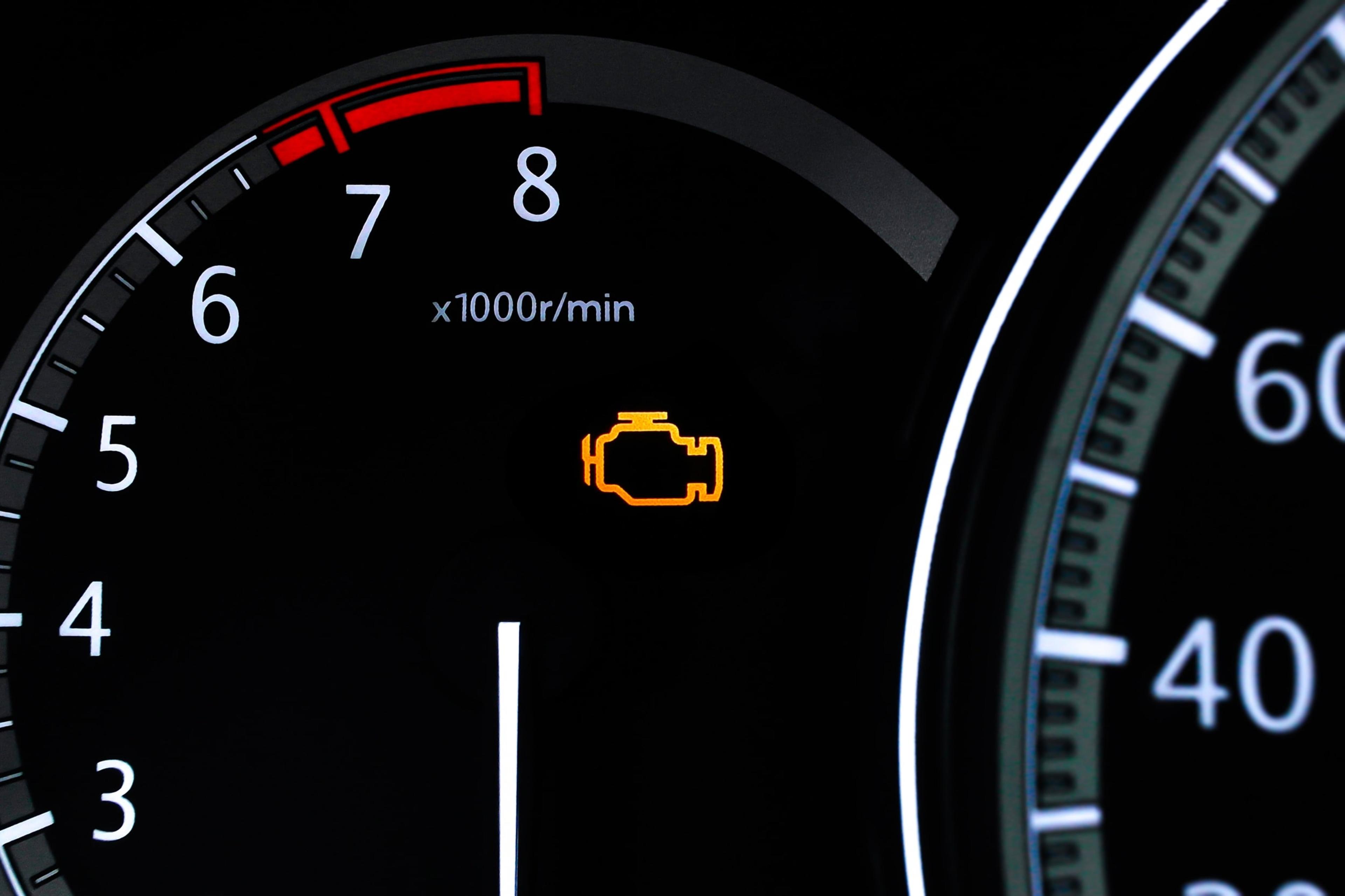
It’s a sight that makes any driver’s heart sink. That little amber engine symbol suddenly glows on your dashboard, and your mind starts to race with questions.
Is the car safe to drive? Is this going to be expensive?
That single warning light can mean many different things, from a simple fix to something more serious. The hardest part is often just not knowing which one it is.
To help you make sense of it all, this guide breaks everything down. We’ll walk you through what that light could mean, what you should do next, and how to get it sorted without the stress.
What the check engine light actually means
The check engine light means that your car's main computer, the Engine Control Unit (ECU), has detected a fault in the vehicle's engine, transmission, or emissions system. It’s a general warning, officially called the Malfunction Indicator Lamp (MIL), indicating that a sensor has reported an issue that requires professional diagnosis.
Basically, it’s your car’s way of telling you it needs a check-up. The light itself doesn't point to the exact problem, but the way it lights up tells you how serious it is.
However, how the light appears is the most important clue. It tells you how urgently you need to act.
- A solid light: This is the most common situation. It means the system has found a fault that is present and needs looking at. While it’s not an emergency, you should book a diagnostic check soon. Ignoring a solid light can allow a minor issue to develop into a much bigger and more expensive problem.
- A flashing light: This is an urgent warning that demands immediate action. A flashing light signals a severe problem is happening right now, like an engine misfire that could quickly destroy expensive components. If your check engine light is flashing, you must pull over as soon as it's safe, switch off the engine, and call for help.
Can I keep driving with the light on?
If the light is solid and the car is driving normally…
Generally, yes. You can continue driving, but you should not ignore the warning. A solid light is your car’s way of saying, “Something isn’t right, please book me in for a check-up soon”.
If the light is flashing…
The answer is a definite NO. You should not continue driving.
A flashing light signals a major fault that is happening right now and could be causing severe, irreversible damage to your engine or exhaust system. Trying to "limp home" could be the difference between a straightforward repair and a catastrophic failure.
Common causes behind the check engine light
While that light can point to dozens of different faults, our technicians find that it usually comes down to one of a handful of common culprits. Before you assume the worst, it helps to know what usually triggers the check engine light.
1. A loose or faulty fuel cap
Believe it or not, this is a top cause. Your fuel cap does more than just keep fuel from splashing out. It’s also responsible for sealing the entire fuel system.
If the cap is loose, cracked, or not tightened properly after you fill up, the system can lose pressure, triggering a fault code.
2. A failing oxygen (O2) sensor
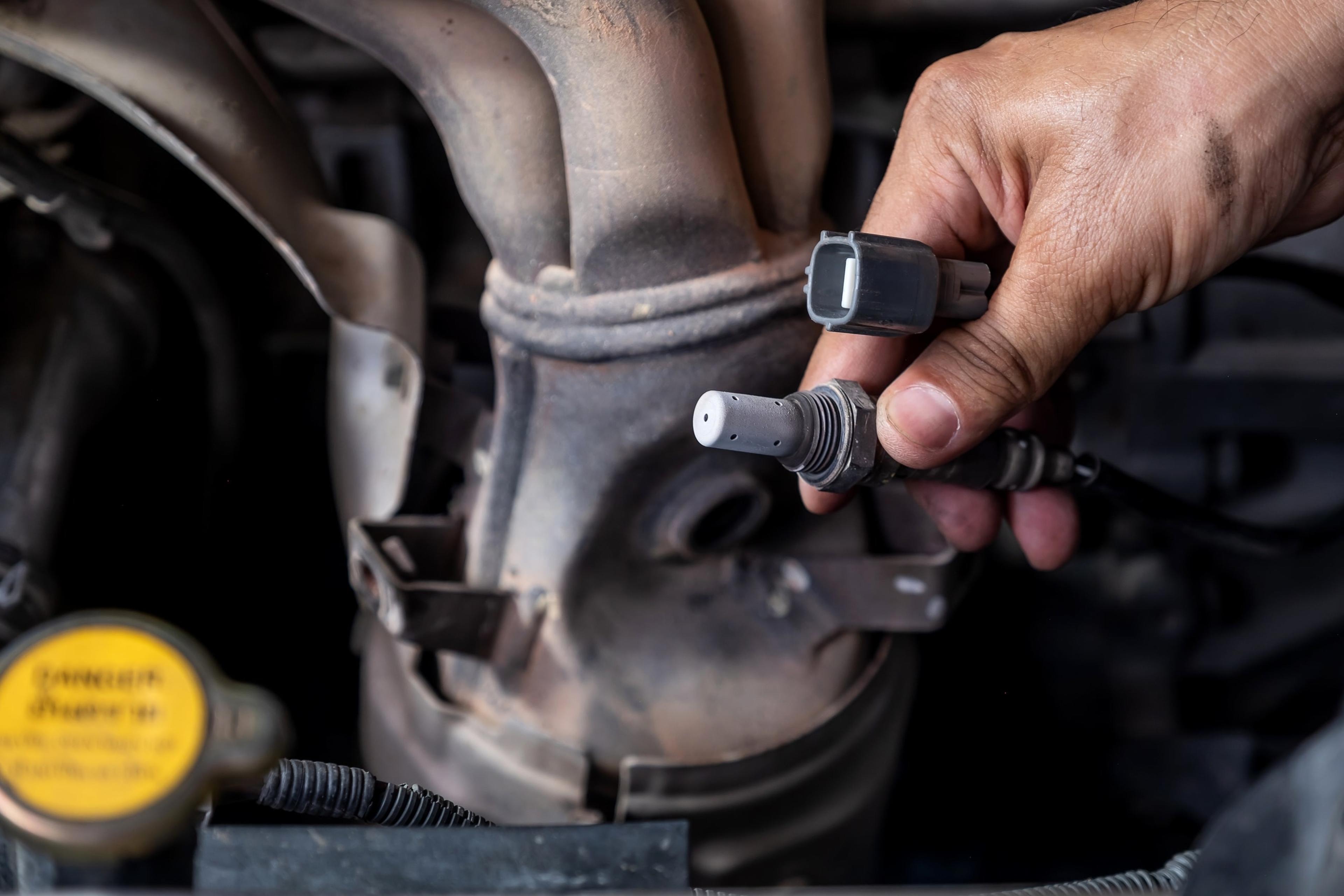
This sensor measures the amount of unburnt oxygen in your car’s exhaust system. That information helps the car’s computer determine the right air-to-fuel mixture for maximum efficiency. An oxygen sensor failure sends bad data, leading to poor fuel economy and potentially damaging more expensive parts like the catalytic converter over time.
3. Worn spark plugs or ignition coils
Spark plugs are what ignite the fuel in your engine. If they’re old and worn, or the ignition coil that powers them is failing, it can lead to an engine misfire. Your car’s computer will detect this immediately and turn on the check engine light to let you know something is wrong with the combustion process.
4. A faulty mass airflow sensor
The mass airflow (MAF) sensor measures the amount of air entering the engine. This is another critical piece of data the car’s computer needs to balance the fuel mixture correctly. If it’s failing, it can cause your car to stall, idle roughly, and perform poorly.
5. A failing catalytic converter
This is one of the more serious and expensive problems. The catalytic converter is part of your exhaust system that converts harmful gases into less harmful emissions. It rarely fails on its own. Most often, its failure is a direct result of another issue (like bad spark plugs or a faulty O2 sensor) being ignored. This is the perfect example of why it’s so important to have a check engine light diagnosed early.
What to do when the light comes on
So, the light has appeared on your dash. The key is not to panic but to assess the situation calmly. How you should react all comes down to what the light and the car are telling you.
Here is a simple four-step guide to follow.
Step #1: Check how the light is behaving
First things first, look closely at the light itself. Is it solid or is it flashing?
As we covered, a flashing light is a clear signal to pull over as soon as it's safe, turn off the engine, and call for help (road-side assistance or a tow truck). A solid light is less of an immediate emergency.
Step #2: Pay attention to how your car is driving
Next, use your other senses.
Are there any other warning lights on? Do you hear any unusual sounds, like knocking, sputtering, or hissing? Can you smell anything strange? And most importantly, does the car feel different?
A serious loss of power, shaking, or rough idling are all signs that you should stop driving.
Step #3: Try the simple fix (check your fuel cap)

This is the one check every driver can easily do. When you're safely parked, check your fuel cap and make sure it's on tight (give it a few extra clicks to be certain). If a loose fuel cap was the problem, the light should go off by itself after a few more drives.
Step #4: Reduce the load on the engine
If the light is solid and the car seems to be driving fine, it’s still wise to take it easy. Avoid aggressive acceleration, high speeds, or towing heavy loads until you can get the car properly diagnosed.
How to diagnose the problem
While it's tempting to search online forums and guess what might be wrong, the only way to accurately find the cause of a check engine light is to communicate with the car's computer. This is done using its On-Board Diagnostics (OBD) system.
Every modern car is fitted with an OBD-II port, usually located under the dashboard. A qualified technician uses a specialised diagnostic scanner, plugs it into this port, and reads the Diagnostic Trouble Code (DTC) that your car has stored. This code, something like 'P0301', points them toward the area of the fault.
However (and this is the crucial part) the code is a symptom, not the final diagnosis.
This is where professional expertise is so important. A basic code reader might tell you there’s an issue with an oxygen sensor, for example. An amateur might simply replace the sensor, only for the light to come back on. A trained technician at our Perth car service centres knows the code is just the starting point. They will investigate further to see if the sensor itself has failed or if the root cause is actually a vacuum leak, a wiring fault, or another related issue.
This professional diagnostic process ensures the real problem is fixed correctly the first time, saving you the time, money, and stress of replacing parts you don't need.
Need help? We’re here to sort it out
The real key to avoiding check engine light anxiety in the long run is proactive care.
A regular, professional car service in Perth is the single best way to keep your vehicle healthy, catch small problems before they escalate, and give you true peace of mind on the road. To make things completely transparent, you can get a service quote online before you even come in, so you know exactly what to expect.
Don’t let that little light cause you any more stress. Book your diagnostic check or routine service online today, and let the team at John Hughes give you the confidence you need to drive safely.